Ghost Gear: The Plastic That Keeps Fishing Long After People Leave

Some ocean plastic floats quietly.
Ghost gear does something worse: it keeps working.
It drifts, sinks, tangles, traps, and catches. A lost net does not know it has been lost. A broken fishing line does not stop being dangerous because nobody is holding it anymore. A trap on the seabed can still become a trap.
That is why ghost gear is one of the most harmful forms of ocean plastic.
For sailors, it is also one of the types of marine pollution we may actually see. A floating rope. A piece of net near the bow. A buoy with loose line. A tangled mess caught around a propeller or anchor. Sometimes it looks small and harmless. Sometimes it is clearly not.
But behind the simple word “gear” is a bigger problem: fishing equipment that has been abandoned, lost, or discarded, and continues to affect marine life long after people leave.
What Is Ghost Gear?
Ghost gear means abandoned, lost, or discarded fishing gear in the marine environment.
It can include:
fishing nets
lines
ropes
traps
pots
hooks
floats
buoys
longlines
fish aggregating devices
pieces of broken commercial fishing equipment
The official term often used by organisations such as FAO is abandoned, lost or otherwise discarded fishing gear, or ALDFG. Very poetic, obviously. The ocean got “ghost gear.” The paperwork got ALDFG.
But the meaning is simple.
It is fishing gear that is no longer under control.
And because much modern fishing gear is made from strong synthetic materials, it can stay in the sea for a long time. It may break into smaller pieces, but it does not simply disappear.
The Global Ghost Gear Initiative describes ghost fishing as what happens when lost or discarded gear continues to catch fish and other animals. NOAA also explains that derelict fishing gear can continue trapping and killing fish, crustaceans, marine mammals, sea turtles, and seabirds.
Why Is Ghost Gear So Dangerous?
All ocean plastic is a problem, but ghost gear has an extra danger.
A plastic bottle may float, break down, or wash ashore. It can still harm wildlife, of course. But a fishing net or trap was designed to catch animals. When it is lost, it can keep doing exactly that.
This is why ghost gear is sometimes called the deadliest form of marine plastic pollution.
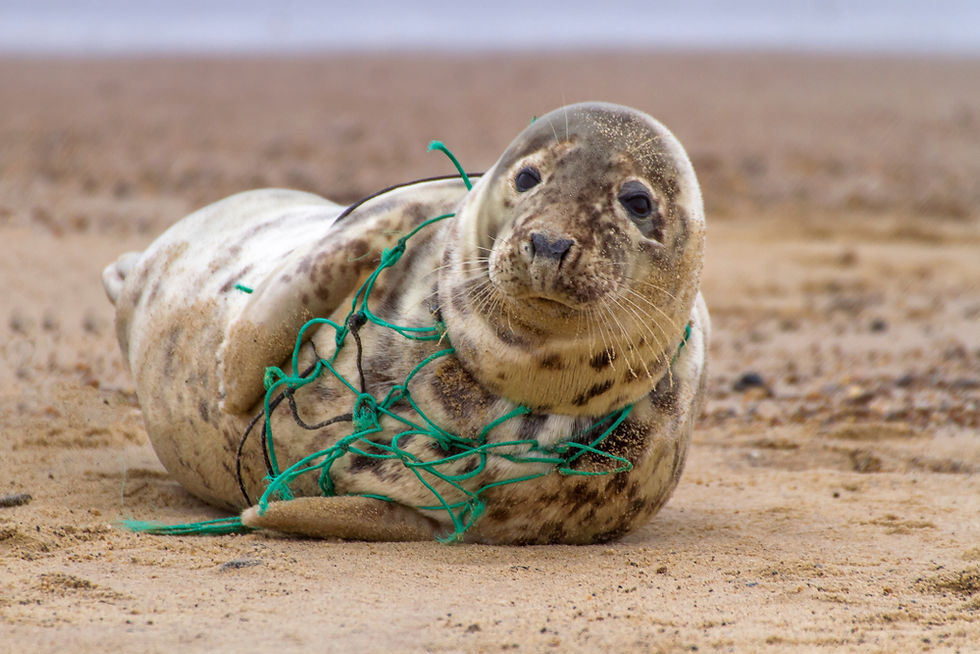
Lost nets can trap fish, turtles, seals, dolphins, seabirds, sharks, and other marine life.
Animals may drown, starve, become injured, or carry pieces of gear around their bodies. Lines can cut into skin. Nets can wrap around fins, flippers, wings, or tails.
And the worst part is that ghost gear can keep catching again and again.
An animal gets trapped. That trapped animal may attract another animal. Then another. A single piece of gear can become a long, quiet chain of harm.
It is a horrible thought, but an important one.
Because ghost gear does not need people nearby to keep causing damage.
Ghost Fishing: When Gear Keeps Catching
Ghost fishing is the process where abandoned or lost fishing gear continues to catch marine animals.
This can happen with nets, traps, pots, and lines. A lost net may drift through the water or settle somewhere on the seabed. A trap may still attract fish or crabs. A longline may keep hooks in the water.
Sometimes the gear keeps moving. Sometimes it becomes tangled on rocks, reefs, wrecks, or seagrass. Sometimes it washes into shallow areas where birds, turtles, or coastal animals can become caught.
For sailors, ghost fishing is mostly invisible. We may see a rope at the surface or a net floating in a bay, but much of the problem is below us.
That is what makes it so disturbing. The sea can look beautiful from the cockpit while something harmful is still happening underneath.
And sailors know this feeling well: the surface rarely tells the whole story.
Why Does Fishing Gear Get Lost?
Not all ghost gear is deliberately dumped.
Fishing gear can be lost for many reasons:
bad weather
storms
strong currents
gear conflicts
snagging on rocks or wrecks
propeller damage
poor marking
illegal fishing
abandoned equipment
accidental loss
gear cut loose for safety
Sometimes gear is lost during normal fishing operations. Sometimes it is abandoned because retrieving it is difficult, dangerous, or expensive. Sometimes illegal or unreported fishing makes the problem worse because gear may be left behind to avoid detection.
This is important because ghost gear is not only an environmental issue. It is also a fisheries issue, a safety issue, and a management issue.
The solution is not as simple as saying “fishing is bad.” Many coastal communities depend on fishing. Many fishers do not want to lose expensive gear. Lost gear can also damage their livelihoods.
The real problem is poorly managed gear, lack of tracking, bad disposal systems, weak enforcement, and the fact that once gear is lost, it can be very difficult to find and remove.
Like many ocean problems, it is complicated.
The sea does not do simple problems. It prefers ones with ropes, weather, economics, regulations, and at least three people disagreeing on the dock.
Why Sailors Should Care
Sailors are not usually the people creating most ghost gear, but we are often among the people who notice it.
We move slowly through coastal waters. We anchor in bays. We sail past fishing areas. We look at the water because the water is part of our world.
And sometimes, we see things.
A net drifting near the surface.
A plastic rope wrapped around a buoy.
Fishing line tangled around a rudder.
A trap marker in a strange place.
A bird caught in line.
A turtle struggling with plastic.
A beach covered with broken floats and rope.
These moments stay with you.
They also remind us that ocean plastic is not always a distant picture from somewhere else. Sometimes it is right there, next to your hull.
Ghost gear can also create direct risks for boats. Lines and nets can wrap around propellers, rudders, keels, daggerboards, or anchors. A piece of floating gear that looks small may have much more attached underwater.
Anyone who has ever dived under a boat to remove line from a propeller knows this is not a charming little boat-life adventure. It is cold, awkward, and often comes with a full vocabulary of words not suitable for a family sailing blog.
What Should Sailors Do If They See Ghost Gear?
This depends on the situation.
If you see a small, loose piece of rope or fishing line that can be removed safely, you may be able to collect it and dispose of it properly ashore.
But large nets, heavy ropes, traps, or tangled gear can be dangerous. They may be under tension, attached to something, heavy with growth, or hiding hooks. Trying to remove them from the water without the right equipment can put you, your crew, or your boat at risk.
So the first rule is simple:
Do not become the next thing tangled in it.
If you see serious ghost gear, consider:
marking the position
taking a photo if safe
reporting it to local authorities, harbour offices, coast guard, marina staff, park rangers, or local cleanup groups
warning nearby boats if it is a navigation hazard
avoiding it with plenty of distance
not pulling unknown gear onto the boat without understanding what is attached
If an animal is trapped, do not rush into the water unless you are trained and it is safe.
Entangled marine animals can panic, and large animals can injure rescuers by accident. In many places, there are trained rescue groups for marine wildlife. Contact local authorities or rescue organisations if possible.
It feels awful to see an animal in trouble and not be able to fix it immediately. But unsafe rescue attempts can make things worse.
At sea, caring also means staying sensible.
Can Ghost Gear Be Recycled?
Sometimes, yes.
Some ghost gear can be collected, cleaned, and recycled into new materials. There are projects around the world working with fishers, ports, divers, governments, and companies to recover old nets and ropes.
But recycling ghost gear is not always easy. Fishing gear can be made from different plastics and mixed materials. It may be dirty, damaged, heavy, tangled, or contaminated. It may contain metal, lead, organic matter, or many types of plastic in one piece.
That makes prevention even more important.
The best ghost gear is the gear that never becomes ghost gear in the first place.
This is why solutions include better gear marking, better reporting, port reception facilities, retrieval programs, deposit systems, tracking technology, and stronger cooperation between fishers, governments, NGOs, and local communities.
FAO has voluntary guidelines on the marking of fishing gear, which are meant to help prevent and reduce abandoned, lost, or discarded gear. The Global Ghost Gear Initiative also works across sectors to reduce the problem worldwide.
In other words, this is not only about beach cleanups. It is about changing the system that allows fishing gear to vanish into the sea without anyone being able to track, recover, or manage it properly.
What Can Cruisers and Boaters Do?
Cruisers and boaters cannot solve ghost gear alone.
But we can still be part of the solution.
We can:
avoid throwing any line, rope, cable ties, or fishing tackle overboard
secure our own gear properly
collect small pieces of marine debris when safe
report large or dangerous ghost gear
support local cleanup organisations
choose responsible seafood when possible
avoid anchoring in sensitive habitats
share what we see on the water
talk about ghost gear as part of ocean plastic awareness
If you fish from your boat, be extra careful with lines, hooks, lures, and broken tackle. Small fishing items can still harm birds, turtles, fish, and marine mammals.
And if you see lost gear in an anchorage, tell other sailors. A quick warning can prevent a wrapped propeller, a damaged rudder, or worse.
Sailors are good at sharing practical information: where the holding is bad, which marina shower is suspicious, where the supermarket is, which pontoon cat secretly owns the place.
We can also share information that helps protect the sea.
Ghost Gear and the Bigger Ocean Plastic Problem
Ghost gear is part of the wider ocean plastic problem, but it deserves special attention because it is designed to catch.
This is why it connects so strongly with ocean conservation. When we talk about ocean plastic, many people imagine bottles, bags, and packaging. Those matter too. But lost fishing gear is different. It can keep harming animals long after it enters the water.
If you want to read more about the plastic sailors notice at sea, you may also like our article on ocean plastic sailors see. And for practical ideas about small actions on board, our guide to ocean conservation for cruisers looks at ways boaters can reduce their impact.
The more time you spend near the sea, the more you understand something simple:
The ocean is not only scenery.
It is a living place.
And living places can be hurt.
A Quiet Problem That Should Not Stay Quiet
Ghost gear is easy to ignore because much of it is out of sight.
It may be drifting below the surface. It may be wrapped around a reef. It may be sitting on the seabed. It may be far from the person who lost it and far from the people who could remove it.
But it is not gone.
That is the uncomfortable truth.
A net can keep fishing.A line can keep cutting.A trap can keep trapping.A rope can keep tangling.
Long after people leave, ghost gear can remain in the sea, still doing damage.
For sailors, this should matter. Not because we are responsible for all of it, but because we are witnesses to the ocean in a way many people are not.
We see the beautiful parts.We also see the things that should not be there.
And maybe that is part of our job too: to notice, to care, to speak about it, and when it is safe, to help.
The sea gives us so much.
The least we can do is pay attention.
Subscribe to our mailing list and get the latest Sailoscope articles, cruising guides, and boat life stories straight to your inbox.


