The Quiet Signals of Ocean Plastic — What Sailors See Every Day

You do not always notice ocean plastic in one dramatic moment.
Sometimes it is just a bottle drifting past the boat in still water. A torn bag caught in reeds near shore. A line of small fragments trapped in a marina corner. A food wrapper turning slowly in the wake. Not enough to shock you at once. Just enough to stay in your mind.
That is part of what makes it feel so heavy.
Plastic pollution in the sea is now so widespread that UNEP says plastics account for at least 85% of total marine waste, and around 11 million tonnes flow into aquatic ecosystems each year.
But sailors do not need a global number to understand the problem.
They see the small signs.

Ocean plastic is often noticed in quiet moments
A lot of the time, plastic at sea does not arrive as a dramatic image.
It appears in the ordinary spaces of boating life. Around marina edges. Inside fishing harbours. In anchorages after a windy night. Along the tide line on beaches that looked beautiful from a distance. In the floating bits that collect where current, wind, and human habit all meet.
That is one reason the problem feels so personal from a boat.
You are not only reading about it. You are moving through it.
European Environment Agency reporting describes marine litter as a connected source-to-sea problem, shaped by land-based waste, coastal activity, and the way water systems carry debris into the marine environment.
It changes the way you look at beautiful places
This is one of the strangest parts.
You can arrive in a place that still looks stunning. Clear water. Lovely light. Quiet anchorage. And then, little by little, you begin to notice the details that do not belong there.
A faded bottle cap in the shallows.
A piece of broken foam under the pontoon.
Fishing line wrapped around rocks.
A plastic container caught in seaweed.
The place is still beautiful.
But now the beauty feels more fragile.
That is what ocean plastic often does. It does not always destroy the whole view. Sometimes it simply interrupts it, quietly and repeatedly, until you stop being able to pretend it is rare.
The problem is not only what floats
The visible pieces are only one part of the story.
The European Environment Agency explains that larger plastic litter gradually breaks into smaller pieces known as microplastics, and that these particles are now present in seas, land, and air, with negative effects on ecosystems, animals, and people.
That matters because what sailors notice on the surface is often only the most visible part of something much larger.
A drifting bottle is easy to point at.A broken crate on the shore is easy to photograph.The tiny fragments already mixed into sand, water, and food chains are much harder to see.
And maybe that is part of why this issue can feel so unsettling at sea. The obvious signs are sad enough. But they also remind you of the part you cannot see.
Wildlife pays the price first
This is where the subject stops feeling abstract very quickly.
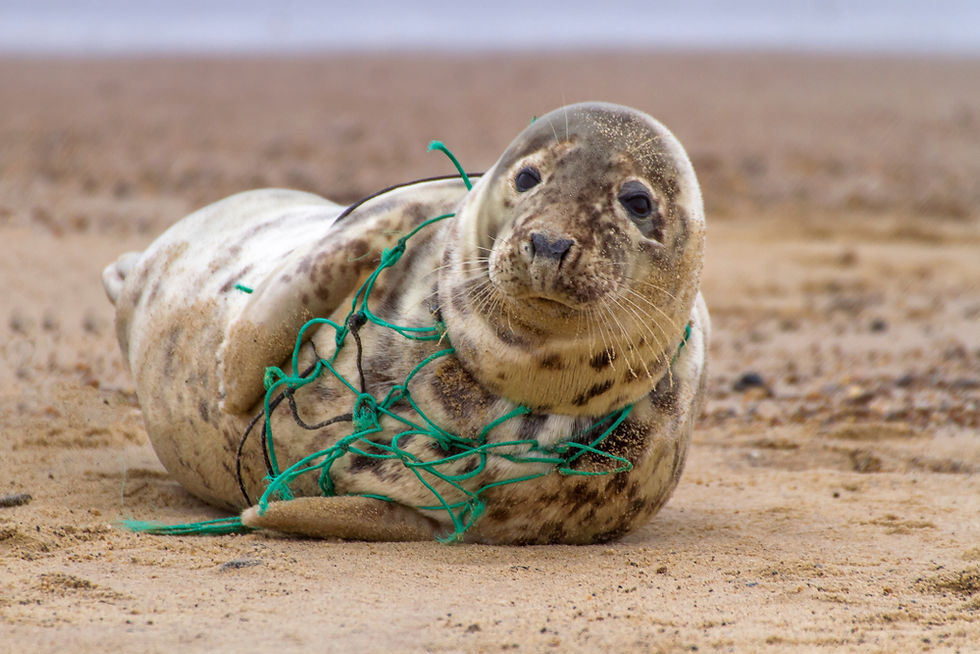
IUCN says the most visible impacts of marine plastic pollution include ingestion, suffocation, and entanglement affecting hundreds of marine species.
Sailors know that the sea feels different when wildlife is present. Birds, turtles, fish, dolphins — they change the atmosphere of a passage or an anchorage completely. So when plastic enters that same space, it does not feel like a separate environmental topic. It feels like something intruding directly into a living world you are already watching closely.
That is why even small pieces can feel hard to ignore.

Sailors often notice patterns other people miss
One thing boat life does teach you is that water carries stories.
You begin to notice where things collect. Which corners of a marina trap floating debris. Which beaches stay clean after one wind direction and change completely after another. Which harbours always seem to gather a tired line of bottles, foam, and packaging near the wall.
That kind of noticing is not scientific in itself. But it changes how you understand the sea.
You start to see that plastic is not only a litter problem. It is also a movement problem. Wind moves it. Current moves it. Rivers move it. Boats move it. And once you begin to see those patterns, it becomes difficult to unsee them.
That broader movement is also reflected in environmental reporting, which treats marine litter as something transported through connected coastal and water systems rather than a problem limited to one beach or one harbour.
It also changes what “clean” means
This may be one of the quietest shifts of all.
Before boat life, many people think of a clean place as one that looks clean from shore. But once you spend more time around marinas, beaches, anchorages, and working waterfronts, your idea of clean becomes more detailed.
You notice the waterline.
You notice what gathers under pontoons.
You notice what comes in after busy weekends.
You notice whether a place looks cared for only on land, or also at the edge where the water begins.
And once that awareness grows, it becomes hard not to carry it everywhere.
This is not only an environmental story. It is a boating story too
Ocean plastic is often discussed as a global environmental crisis, and of course it is that. But from a boat, it also feels closer and more immediate.
It is not only sad to look at. It becomes part of daily boating reality. It drifts into marina corners. It appears in anchorages. It changes the way people see shorelines, harbours, and wildlife. It becomes one more thing the sea is forced to carry.
That is why this does not feel like a separate issue for sailors. It belongs to the same world they move through every day.
The quiet signals matter
Maybe that is what I really wanted to say in this post.
Ocean plastic is not only the big shocking image that appears in campaigns or documentaries. Sometimes it is much quieter than that. It appears in repeated small moments. In the things sailors begin noticing almost without meaning to. In the floating signs that seem minor on their own, but together tell a much larger story.
And maybe those quiet signs matter because they change how we move through the sea.
They make us look more closely.They make us feel less separate from the problem.They remind us that the sea is not endlessly able to hide what people throw into it.
The ocean still gives beauty, calm, movement, and freedom in ways that are hard to explain to people who have never lived closely with it. But loving the sea also means noticing what is happening to it, even when the signs are small.
Sometimes especially then.
You May Also Find This Useful
For a more practical look at human impact around the water, Marine Conservation and Yachting: Can Sailing Be Sustainable? is a natural next read.
And if you want a post that looks at the boating world through everyday observation, Marina Cultures Around the Mediterranean fits well with this one too.
Subscribe to our mailing list to stay informed about new Sailoscope posts, marina life, cruising culture, and the small details of boat life that many people only learn once they are already out there.